QuickBooks Error 3120 — How to Fix the Transaction Mapping Nightmare for Good
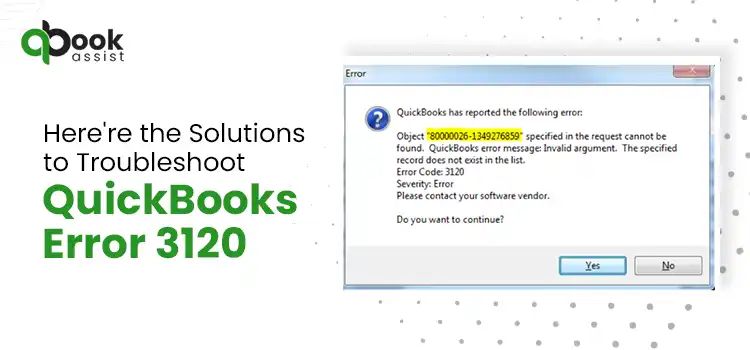
Everything was running fine. Your QuickBooks POS processed the sale. The customer paid. And then — right when the financial exchange tried to sync that transaction into QuickBooks Desktop — everything stopped.
“Object: 800000-1349276859 specified in the request cannot be found. QuickBooks error message: Invalid argument. The specified record does not exist in the list.”
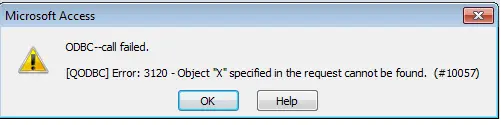
That is QuickBooks Error 3120. And if you have seen it, you know exactly how frustrating it is. Your POS and your Desktop are supposed to talk to each other seamlessly. Instead, they are pointing fingers at each other while your payment records sit in limbo.
The good news — this is fixable. In most cases, completely fixable without touching your company file or losing a single transaction.
At QBookAssist, we have resolved QuickBooks Error Code 3120 for retail business owners, accountants, and bookkeepers across the US. This guide covers every cause, every fix, and exactly when to stop troubleshooting on your own and call someone who does this for a living.
What Exactly Is QuickBooks Error 3120?
Let us clear something up right away — QuickBooks Error 3120 is not a file corruption error. Your company data is almost certainly intact.
What it actually is — it is a mapping and synchronization error. Specifically, it happens when QuickBooks Desktop Point of Sale tries to run a financial exchange with QuickBooks Desktop, and something in that handshake breaks down. Either the accounts on both sides do not match up, or one side is trying to record a transaction that already exists — or that the other side cannot find at all.
The technical name for this is a QuickBooks transaction update error 3120. It belongs to the QuickBooks 3XXX series of errors — a family that includes Error 3000, Error 3140, Error 3170, and Error 3180 — all of which are related to data exchange and account reference issues between QuickBooks products.
The error mainly occurs when the transaction you are trying to enter already exists in QuickBooks records — or when the system cannot find the record it is looking for on either side of the sync.
The status code message that appears says it all: “The specified account is invalid or of the wrong type.” That single line tells you exactly where to look — your account mapping.
What Causes QuickBooks Error 3120?
Before you start clicking through solutions randomly, take two minutes to identify which cause actually applies to your situation. It will save you an hour of unnecessary troubleshooting.
Cause 1 — Incorrect Account Mapping in QuickBooks POS
This is the number one cause — and it is responsible for the majority of Error 3120 cases we handle.
If your Accounts Receivable and Accounts Payable are not mapped correctly, you will face error code 3120, responsible for invalid references to these accounts.
When you set up QuickBooks Desktop Point of Sale, every transaction type — sales, payments, refunds, inventory — needs to be mapped to the correct corresponding account in QuickBooks Desktop. If even one of these mappings is off — pointing to a wrong account type or an account that no longer exists — the financial exchange breaks and Error 3120 appears.
You can spot incorrectly mapped accounts easily. In QuickBooks POS preferences, account names that are mapped incorrectly appear with brackets around them — like [Accounts Receivable] instead of just Accounts Receivable. If you see brackets — that is your culprit.
Cause 2 — QuickBooks POS Synchronization Failure
Sometimes the error is not about accounts at all. It is about timing.
If the initial exchange was removed or manually modified in the QuickBooks application, users may receive error 3120.
When a financial exchange between QuickBooks POS and QuickBooks Desktop is interrupted midway — power outage, manual close, software crash — the data on both sides ends up in a mismatched state. One side thinks the transaction was recorded. The other side has no record of it. The next sync attempt triggers status code 3120 because the system is trying to record something that partially exists — or find something that was never fully saved.
Cause 3 — Duplicate Transaction Already in the File
The error mainly occurs when the transaction you try to enter already exists in QuickBooks records.
This happens when a payment gets processed in POS, the sync partially runs, and then someone tries to manually enter the same payment in QuickBooks Desktop. Now both sides have a version of the transaction — and when the next financial exchange runs, the system flags the conflict as QuickBooks banking error 3120.
Cause 4 — Mismatched Payment Invoices
The payment amount in POS and the invoice amount in QuickBooks Desktop do not match. Maybe the invoice was edited after the payment was taken. Maybe a discount was applied on one side but not the other. Either way — the mismatch triggers the error.
This error normally indicates that a specific item is missing from QuickBooks or that there is an issue with the vendor, supplier, customer, or employee information while processing the bank transactions.
Cause 5 — Corrupted Data or Damaged Installation
A corrupted or damaged company file can also trigger QuickBooks Error 3120. In such cases, QuickBooks is unable to read the transaction data correctly, causing a sync failure.
This is the less common but more serious cause. A damaged QuickBooks installation file or a company file with corrupted records prevents the financial exchange from completing. The error shows up because the system literally cannot read what it needs to read.
Cause 6 — Incorrect or Outdated QuickBooks Web Connector
If you are using a third-party application integrated with QuickBooks through the Web Connector — and that connector is outdated or misconfigured — it can trigger QuickBooks runtime error 3120 during every sync attempt. This is especially common with ecommerce integrations and inventory management systems that connect to QuickBooks.
Signs You Are Dealing With QuickBooks Error 3120
Just so there is no confusion — here is what the error actually looks like when it hits:
The error message on your screen reads something like:
“Status code 3120: Object ‘80000026-1349276859’ specified in the request cannot be found. QuickBooks error message: Invalid argument. The specified record does not exist in the list.”
Alongside this message, you will typically notice:
Your QuickBooks application becomes unresponsive for a period after the error appears. The financial exchange stops mid-process — leaving transactions in a pending state on the POS side. QuickBooks performance degrades noticeably — slower load times, freezing when navigating between screens. Some receipts display as ####### instead of showing account names — this is QuickBooks telling you the referenced account is invalid or typed incorrectly. Payment downloads fail when you try to bring transactions in through invoices.
If you are seeing three or more of these at once — you are dealing with a classic QuickBooks error message 3120 scenario. Let us fix it.
Step-by-Step: How to Fix QuickBooks Error 3120
Work through these solutions in order. The first two fix the vast majority of cases.
Before you start: Create a backup of both your QuickBooks Desktop company file and your QuickBooks POS data file. Do not skip this. Go to File > Back Up Company > Create Local Backup in QuickBooks Desktop. Then open QuickBooks POS and go to File > Backup Data. Two minutes now protects everything you have built.
Solution 1 — Fix Account Mapping in QuickBooks POS
This is the first thing to check and fixes roughly 60% of Error 3120 cases.
Open QuickBooks Desktop Point of Sale and go to File > Preferences > Company. Under the Financial section, click Accounts. You will see two tabs — Basic and Advanced. Go through both carefully.
Look for any account name displayed in brackets — for example [Accounts Receivable] or [Checking Account]. Brackets mean that account is incorrectly mapped or no longer exists in QuickBooks Desktop. Click on each bracketed account and reassign it to the correct corresponding account from the dropdown list.
Once you have corrected every mapping, click Save. Then run the financial exchange again from QuickBooks POS by going to File > Financial Exchange.
Real talk from our team: Nine out of ten times when a client calls us about QuickBooks error code 3120, the brackets are right there in the account preferences — sitting in plain sight. Check this first before anything else. It is the fastest fix there is.
Solution 2 — Re-Sync Data Between QuickBooks POS and Desktop
If the account mapping looks correct but the error persists, a manual re-sync often clears the conflict.
Open QuickBooks POS and go to File > Re-sync Data in QuickBooks. Follow the on-screen prompts. This process manually matches the data between both systems — identifying what was successfully synced and what still needs to be recorded.
If you are using a third-party integration through the QuickBooks Web Connector — open the Web Connector, check for any pending updates, and update it to the latest version before running the sync again. An outdated Web Connector is a hidden trigger for QuickBooks POS sync issues that many people miss completely.
Pro tip: After the re-sync completes, do not immediately try to add new transactions. Give QuickBooks about five minutes to settle the data before your next financial exchange. Rushing a second sync right after the first often triggers the error again.
Solution 3 — Run QuickBooks Verify and Rebuild Data
If the first two solutions did not fully resolve the QuickBooks transaction update error 3120, it is time to check whether your company file has data integrity issues.
Open QuickBooks Desktop and go to File > Utilities > Verify Data. Let the tool run completely — do not interrupt it. It will scan your company file for any internal inconsistencies or damaged records.
If Verify Data finds problems, go back to File > Utilities > Rebuild Data. Confirm that you want to proceed. The rebuild process repairs the damaged data structures inside your company file. This takes a few minutes depending on your file size.
Once the rebuild is complete, go back to QuickBooks POS and try running the financial exchange again.
Solution 4 — Fix the Customer or Vendor Payment Method
This is a less obvious fix but it works in cases where the error is specifically tied to how a customer or vendor payment is being processed.
Open QuickBooks POS and go to the main menu. Click on Customer and Vendor Profile. Locate the Payment Method list. Find the Cash heading, right-click it, and select Edit. Change the payment method name by adding an X in front — making it (XCash) — and click OK. Then create a new Cash payment method from scratch and set it as the active default.
This resets the payment method reference that QuickBooks was struggling to locate — which is what was triggering the QuickBooks payment entry conflict in the first place.
After making this change, try processing a test payment to confirm the error is resolved.
Solution 5 — Merge Duplicate Customer or Vendor Names
Duplicate entries in your customer or vendor list create conflicting references during the financial exchange — and those conflicts show up as status code 3120.
In QuickBooks Online Accountant, sign in as an admin, click the Gear icon, and select Merge Duplicate Contacts. Review the list of potential duplicates that appears. For any entries that are clearly the same customer or vendor — same name, same contact details — select them and merge them into a single record.
In QuickBooks Desktop, go to Lists > Customer List or Vendor List. Look for any entries that appear twice with slightly different spelling — like “John Smith” and “John Smith LLC.” Edit one of them to match the other exactly, and QuickBooks will prompt you to merge them.
Once duplicates are resolved, run the financial exchange again.
QBookAssist tip: Duplicate names are one of the sneakiest causes of QuickBooks error 3120 because they are so easy to create accidentally — one import, one manual entry, one sync from a third-party app — and suddenly you have two records pointing to the same real-world customer. Always run a duplicate check after any data import.
Solution 6 — Repair or Reinstall QuickBooks Desktop
If none of the above solutions have worked, the issue may be with the QuickBooks installation itself rather than your data.
Download the QuickBooks Tool Hub from Intuit’s official website – it contains the Verify and Rebuild tool you need for this step. Open it and go to the Installation Issues tab. Click QuickBooks Install Diagnostic Tool and let it run. This tool automatically detects and repairs common installation problems that can cause financial exchange errors including QB error 3120.
If the diagnostic tool does not resolve it, consider a clean reinstall of QuickBooks Desktop. Before uninstalling — make sure your company file is backed up and your license key is saved somewhere accessible.
Before You Troubleshoot — Three Things to Check First
These three checks take two minutes but can save you from an hour of troubleshooting the wrong thing:
Check 1: Confirm that the payment amount your customer made and the amount on the invoice are identical — down to the cent. Even a one-cent discrepancy can trigger this error.
Check 2: Run an invoice query to verify that the invoice with the specific transaction ID actually exists in your QuickBooks database. If it was deleted or modified after the payment was taken — that is your cause.
Check 3: Make sure both QuickBooks Desktop and QuickBooks POS are running the same version and update level. A version mismatch between the two products is a known trigger for QuickBooks POS financial exchange errors across the entire 3XXX series.
When QuickBooks Error 3120 Keeps Coming Back
Here is something we hear regularly — “I fixed it, but it came back three days later.”
If QuickBooks error code 3120 keeps recurring after you have applied these solutions, it almost always means one of three things:
The root cause was never fully addressed — most commonly an account mapping that was fixed but reverted because the underlying account in QuickBooks Desktop was edited or made inactive again.
There is a deeper data integrity issue in the company file that the Verify and Rebuild process did not fully resolve. This requires a more thorough file repair using specialized tools.
A third-party integration or app is pushing bad transaction data into QuickBooks repeatedly — triggering the same sync error every time it runs.
In any of these recurring cases, the honest truth is that continuing to apply the same fixes is not going to get you a permanent resolution. You need someone to look at the actual file and the actual sync log to find what keeps breaking.
When to Call a QuickBooks Specialist
Most people can get through Solutions 1 and 2 on their own. But call a certified QuickBooks specialist if:
The error appears on every single financial exchange with no improvement from any troubleshooting step. Your QuickBooks POS synchronization stopped working entirely — not just one transaction but all of them. You are seeing QuickBooks error 3120 alongside other errors like Error 3000, 3140, or the QuickBooks unrecoverable error — which suggests a broader data or installation problem. Your company file is showing signs of damage beyond just the sync error — missing transactions, wrong balances, or reports that do not reconcile – Our QuickBooks data recovery services team can repair the file without risking your existing data. . You are a retailer with high transaction volume and cannot afford to have your POS-to-Desktop sync down for hours while you troubleshoot.
At QBookAssist, we handle QuickBooks Desktop Point of Sale errors — including recurring QB error 3120 cases — every day. We can get into your sync logs, identify exactly what is breaking, and fix it without putting your company file data at risk.
Call us at [+1-866-408-0544] for same-day QuickBooks Error 3120 support.
How to Prevent QuickBooks Error 3120 From Returning
Once you are error-free, spend fifteen minutes doing these things to keep it that way:
Never make an account inactive in QuickBooks Desktop without first updating the POS mapping. Deactivating a mapped account without reassigning it in POS preferences is the fastest way to trigger this error again.
Run the financial exchange daily — not in batches. The longer you wait between syncs, the more opportunity there is for mismatches to build up. Daily exchanges keep both systems in close alignment.
Keep QuickBooks Desktop and QuickBooks POS on matching update levels. Every time you update one, update the other. Do not let them drift apart in version numbers.
Do a quarterly duplicate check on your customer and vendor lists. Any integration with ecommerce, inventory, or CRM systems can create duplicates over time without obvious warning.
Back up both systems before every update. A backup takes two minutes. A company file recovery after a failed update takes hours.
Conclusion
QuickBooks Error 3120 is one of those errors that sounds more intimidating than it actually is — at least in most cases. Nine times out of ten it comes down to account mapping that went wrong somewhere between QuickBooks POS and QuickBooks Desktop. Fix the mapping, re-sync the data, and you are done.
But when it keeps coming back — or when it arrives alongside other errors — it is telling you something deeper needs attention. Do not ignore that signal.
Work through the six solutions above in order. And if you get to Solution 6 and the error is still there — or if it comes back within a few days — that is when you call someone who handles this daily.
Frequently Asked Questions (FAQs)
Q1: What is QuickBooks Error 3120 and what causes it?
Ans. QuickBooks Error 3120 is a transaction mapping and synchronization error that occurs during the financial exchange between QuickBooks Desktop and QuickBooks POS. The most common causes are incorrect account mapping in POS preferences, mismatched payment invoices, duplicate customer or vendor entries, and incomplete synchronization between the two systems.
Q2: Does QuickBooks Error 3120 delete or damage my company file data?
Ans. No — in most cases QuickBooks Error Code 3120 does not damage your company file. It is a runtime sync error, not a data corruption error. Your existing transactions and records remain intact. The error prevents new transactions from being recorded correctly until the underlying mapping or sync issue is resolved.
Q3: How do I identify incorrect account mapping in QuickBooks POS?
Ans. Open QuickBooks POS and go to File > Preferences > Company > Accounts. Look through the Basic and Advanced tabs for any account names displayed inside brackets — for example [Accounts Receivable]. Brackets indicate that account is incorrectly mapped or no longer exists in QuickBooks Desktop. Reassign each bracketed account to the correct one and save.
Q4: Why does QuickBooks Error 3120 keep coming back after I fix it?
Ans. Recurring Error 3120 usually means the root cause was not fully addressed. The most common reasons it returns are a mapped account that was made inactive again in QuickBooks Desktop, a deeper data integrity issue in the company file, or a third-party integration pushing bad transaction data into QuickBooks repeatedly. A QuickBooks specialist can identify the recurring trigger by reviewing the sync logs directly.
Q5: Is QuickBooks Error 3120 related to other QuickBooks errors like 3000 or 3140?
Ans. Yes — Error 3120 belongs to the QuickBooks 3XXX series of errors, which includes Error 3000, Error 3140, Error 3170, and Error 3180. All of these are related to data exchange and account reference issues between QuickBooks products. If you are seeing multiple 3XXX errors at once, it typically indicates a broader account mapping or installation problem that needs a more
Q6: Can I fix QuickBooks Error 3120 without losing any transaction data?
Ans. Yes — in most cases all six solutions covered in this guide can be applied without touching or losing your existing transaction data. The only solution that carries any risk is the reinstall in Solution 6, which is why creating a backup before troubleshooting is essential. With a backup in place, you can resolve the error safely regardless of which solution applies to your situation.
Q7: How long does it take to fix QuickBooks Error 3120?
Ans. If the cause is incorrect account mapping — Solutions 1 and 2 — most users resolve it within 20 to 30 minutes. If the error requires a Verify and Rebuild process, add another 15 to 45 minutes depending on company file size. Complex cases involving recurring errors or third-party integration issues may take longer and benefit from professional support.

Recent Posts
Tried Everything? Here’s How to Fix QuickBooks Error Code 80070057
Read MoreQuickBooks Enterprise Online Support: Your Complete Help Guide
Read MoreIntuit QuickBooks Customer Service: How to Contact Support
Read MoreQuickBooks Payroll: Service, Setup, Pricing and Support Guide
Read MoreQuickBooks Error Support: Get Instant Help Via Live Chat or Call
Read More